
Cooke County Warrant Searches
Cooke County publishes no official Sheriff warrant search or countywide warrant list. Start with the citation or docket instead. Then take the question to the court that keeps the file. A search result is a locator, not a clearance certificate. Have the name as printed, date of birth, citation or cause number, court date, and issuing city or precinct ready. Then follow the records route that matches the case.
- Call the court printed on the citation, bond paper, or notice and ask whether an FTA arrest warrant, bench warrant, or capias pro fine was entered.
- For a felony file, use the District Clerk’s page, Texas Online Records, or the statewide court case search.
- For county-level misdemeanors, ask the County Clerk or County Court at Law which office has the record.
- For a JP citation, call JP 1 or JP 2 and use the county-linked GovRec route only when the named court directs it.
- For a city ticket, call that city’s municipal court. Gainesville, Muenster, Lindsay, and Valley View publish contact routes.
- Call the Sheriff’s Office at 940-665-3471 for routing, custody, or Sheriff-held reports, not a universal warrant result.
A family member can help gather papers, though the court limits what it shares. For court-by-court differences, see the Cooke County warrant records overview.
Cooke County Has No Countywide Portal
The Cooke County Sheriff's site links a records form, a custody system, and general office information. It offers no public warrant search fields. No most-wanted page appears either. The custody lookup only shows booking status, so it cannot reveal every unserved warrant, lower-court capias, sealed file, or municipal case. The linked Texas Judiciary case search can locate public cases. It is not a full Cooke County warrant list.
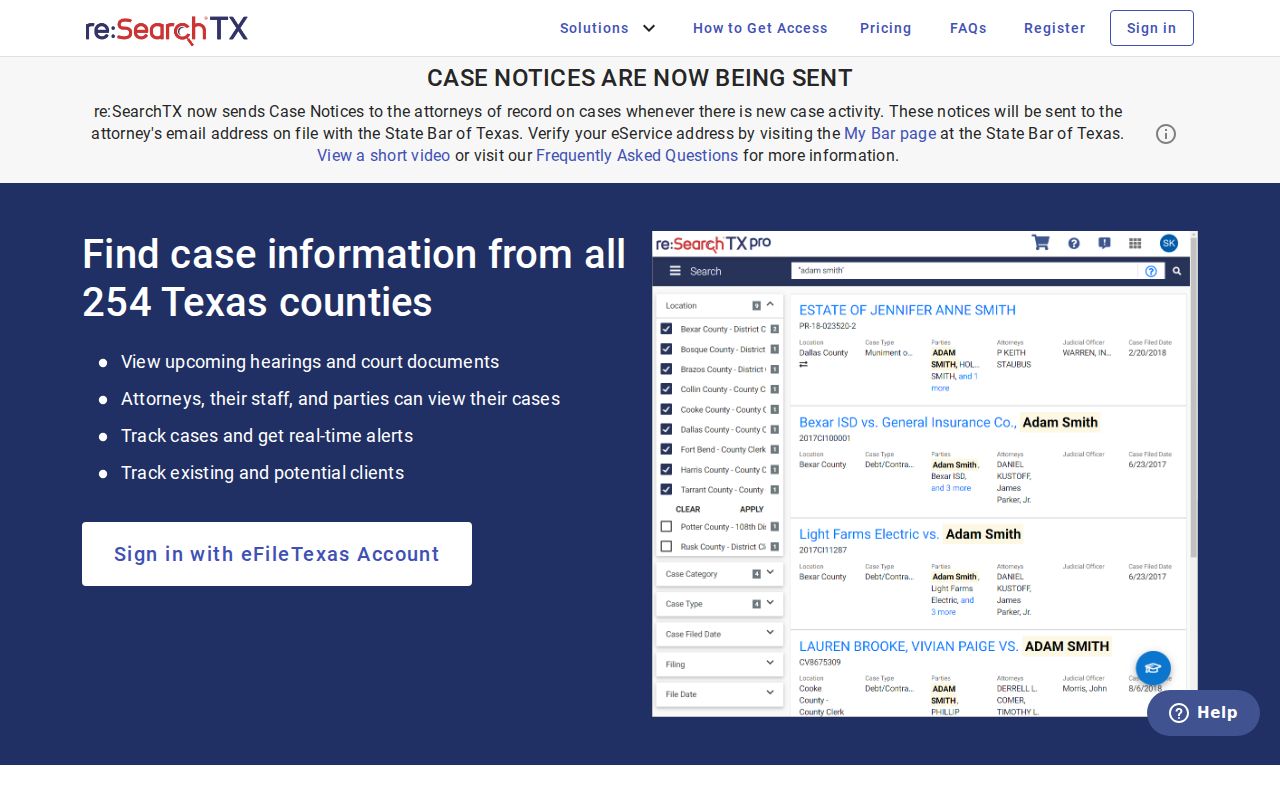
Confirm each case result with the issuing clerk before relying on it.
What a Cooke County Warrant Search Asks
Cooke County posts no Sheriff warrant form with name or warrant-number fields. The other tools are narrower. The District Clerk form covers felony files. JP payment-field requirements are not posted, so call the clerk if a form does not fit.
| Field or control | Type | Required | Use |
|---|---|---|---|
| Sheriff warrant name or number | Not exposed | Not applicable | Call for routing or request Sheriff-held records. |
| Cause number | Text on District Clerk form | Optional or unspecified | Strong locator for felony files. |
| Name and date of birth | Text/date | Unspecified | Use the name on the case; DOB helps with common names. |
| Offense type and year | Text/year | Unspecified | Narrows a District Clerk felony search. |
| Citation or case number | Text on GovRec route | Live rules not captured | Use the number on the ticket and verify the court. |
| Municipal case search | No fields exposed | Not applicable | Call the municipal clerk with name, DOB, and citation number. |
Cooke County's JP 1 court information page lists office hours, citation payment, a records form, and a no-personal-check notice. It is not a live warrant roster. JP 2 has a separate phone and handles former JP 4 matters. Call JP 1 at 940-668-5463. JP 2 sits at 112 South Dixon, Suite 208, at 940-668-5510.
Cooke County Warrant Starts With Citation
A traffic or Class C ticket stays with a justice or municipal court in Cooke County even when the Sheriff later serves process. JP 1 sits at 320 County Road 451, open weekdays 8:00–4:30 with a noon–1 close. JP 2 is at 112 South Dixon, Suite 208. Its weekday hours run 8:00–4:45, also closed noon–1. Both county JP pages link the same GovRec payment route. Both say personal checks are not accepted. Read the ticket before choosing a court in a payment portal. A former JP 4 or Valley View county matter now routes to JP 2 under current county guidance. A Valley View city citation is different. That one is a separate municipal case. When the citation is missing, call the issuing agency or the Cooke County Sheriff for routing. Then ask the named clerk to confirm the court file.
Cooke County Warrant Search Results
A public result can show a case. It may not show current warrant status. Cooke County has no unified public list of status codes, so the same word may mean a court process, a custody event, or a judgment balance. The clerk can tell you which system field is current and whether a separate agency update is still pending.
| Process number | No public county format was located. A sample label such as CASE-YYYY-NNNN is illustrative only. |
|---|---|
| Cause or citation | Identifies the court file and is often more useful than a name alone. |
| Issuing court | Shows which clerk or judge controls the next action. |
| Reason and type | May distinguish probable cause, missed appearance, unpaid fine, contempt, or another process. |
| Bond and balance | A release bond, court fine, copy fee, and vendor charge are different amounts. |
| Status and dates | Ask whether “served,” “recalled,” or “satisfied” applies to the warrant, judgment, or both. |
The District Clerk's request form can locate a felony file. Filing it does not recall a Cooke County warrant. A payment screen can prove a transaction while the court's process still stands.
Cooke County Warrant and Felony Search
The Cooke County District Clerk form asks for a cause number, defendant name, date of birth, offense type, disposition year, and the records requested. Document choices run from a complaint to an indictment, judgment, sentencing record, or other item. It is a felony search route. Misdemeanor requests go to the County Clerk. Texas Online Records is linked from the District Clerk page, and research.txcourts.gov is a separate public case-search tool. The county-linked District Clerk records interface is the connection that page makes. A blank result is not proof. It cannot rule out unexecuted or sealed process. Ask the clerk to verify the warrant status and the record custodian.
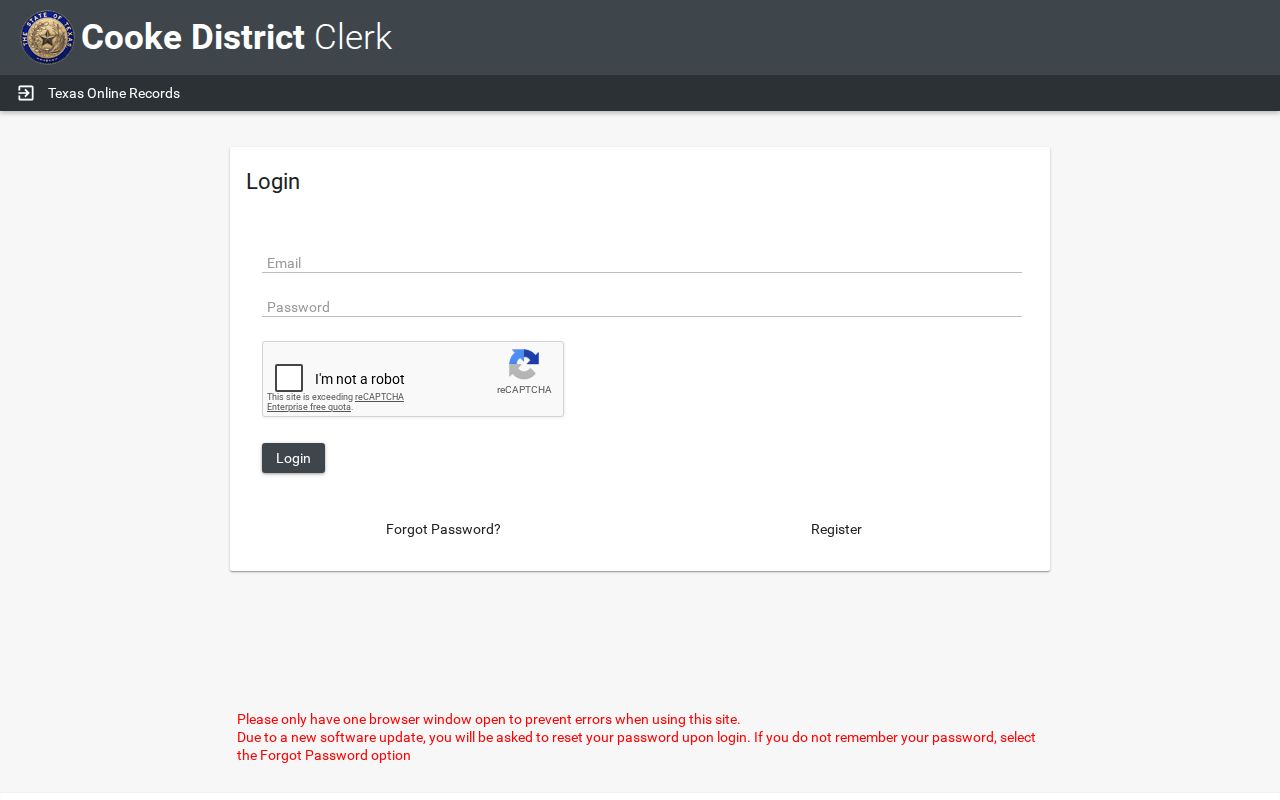
The Cooke County District Clerk form lists a $5 search fee, $1 per page, and $5 certification. Expect advance payment and a 5–7 business-day estimate.
Cooke County Warrants: Who Holds What
The 235th Judicial District Court handles Cooke County felony and district matters. The District Clerk keeps those files. That office sits in Room 207 at 101 South Dixon, phone 940-668-5450. The County Clerk in Room 108 handles county-level misdemeanor and related records; call 940-668-5474 or the criminal/civil line at 940-668-5422. The County Court at Law coordinator answers at 940-668-5470. JP 1 and JP 2 hold their own traffic and Class C cases. City cases belong to city courts. Gainesville Municipal Court, Muenster, Lindsay, Valley View, and other city courts keep those files. The Cooke County Sheriff's Office at 300 County Road 451 can direct questions and handle custody. Its records form sends court records back to the clerks.
JP 1 and JP 2 Payment Routes
Cooke County Justice Courts use the GovRec citation route for looking up and paying JP citations. Think of it as a payment tool, not a warrant database. The screens let you pick a court, a case type, and an identifier, though they never mark which fields are required. When a case is missing or shows a failure to appear, skip the website and call the JP directly. Ask if the citation is still payable, whether a capias pro fine has issued, and whether a hearing, hardship request, payment plan, or reset fits your situation. Keep your receipt, and confirm warrant status with the court on a separate call.
Which Warrants Stay Restricted
Texas opens some warrant records and locks others. Under Article 15.26, an executed arrest warrant and its affidavit can be reached through the magistrate's clerk, subject to other law. An unexecuted or sealed warrant may never appear online. Cooke County also follows stricter rules in places: juvenile material is closed under Family Code Chapter 58, and records tied to an active investigation may be withheld or redacted.
Access rules:
The Texas Public Information Act is a request framework, not a promise that every record will be released.
Executed arrest warrant documents have a statutory access route through the magistrate’s clerk.
Juvenile, sealed, investigative, and unserved material may be limited. A no-result is not proof that no warrant exists.
A denial is not always the end. Ask which Cooke County office holds the record and what rule limits its release. Remember that the public information process and a warrant clearance are two separate actions.
State FTAP Is Not Warrant Status
Texas DPS and OmniBase both describe FTAP as license-renewal reporting that participating courts file after a failure to appear or pay. OmniBase states plainly that it is not a warrant database. DPS cannot confirm warrants either, and updates can lag 3–5 business days after the court reports compliance. So ask whether your problem in Cooke County is a local warrant or an FTAP report. Clearing one does not clear the other. The active warrant guide lists the status routes worth checking.