
Inside the Cooke County Most Wanted Program
Cooke County's Sheriff does not publish a most-wanted program page or roster on its public site. The county page links office information, records, jail and custody details, and a general crime-tips address, but no program name, selection criteria, rewards, update schedule, partner list, or public person search appears anywhere on it. That silence does not mean law enforcement keeps no internal records, and it settles nothing about whether any one person has a warrant. Treat the Sheriff's page as an official contact route rather than a warrant list. For a personal case question, the issuing court remains the place to ask, and no online claim should replace it.
Cooke County Most Wanted Roster Limits
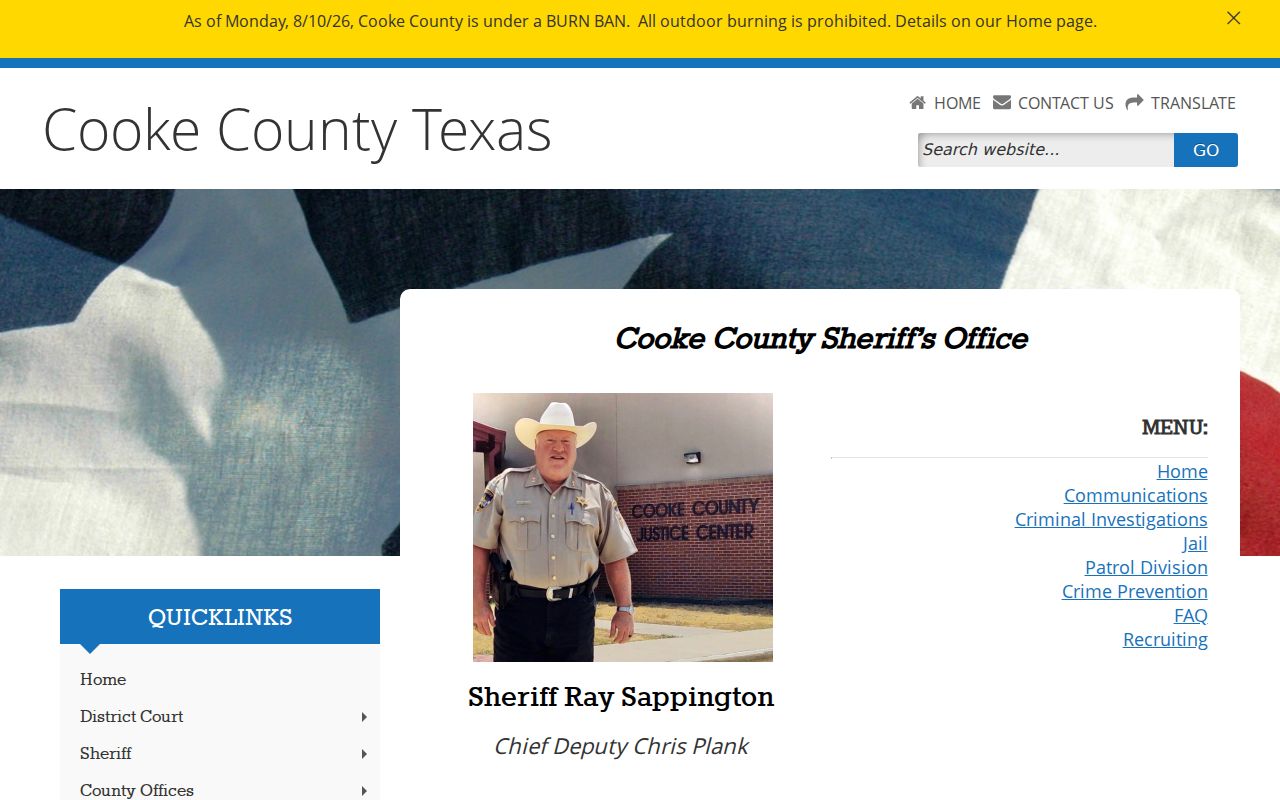
The Cooke County Sheriff's public contact page lists ways to reach the office, but it displays no active-warrant roster. No wanted names appear there. The Texas Judiciary case search opens a public case route, though it will not confirm warrant status or serve as a wanted-person list. For direct contact, the Sheriff's non-emergency number is 940-665-3471. General crime information goes to tips@co.cooke.tx.us. Treat that email as a tip line, not a warrant-status desk. Only the issuing court can confirm a warrant.
Your own case belongs to the court named on the citation. Call the Cooke County Sheriff only for routing or custody questions.
How Cooke County Most Wanted Lists Work
A most-wanted page is a curated enforcement subset. It is never a full list of active warrants. Cooke County publishes no public one, so there is no roster, refresh schedule, field set, or reward program to consult. No amnesty day or warrant roundup runs here either. Older third-party mentions cannot promise a current date, a fee waiver, or safe surrender. Only an official Sheriff or Crime Stoppers landing page could do that. Until one exists, the clerk of the issuing court remains the reliable route for warrant status.
Cooke County Most Wanted Update Schedule
The Cooke County Sheriff publishes no reward amount for tips. There is no stated refresh schedule for any wanted list. No anonymous web form exists, and no Crime Stoppers partner is named, so those details cannot be guessed. If a program appears later, read its official county or city page before relying on it. Check who operates it, the list URL, its publication date, and its reward rules. A safety notice matters too. Meanwhile, the tips email is not an offer of a reward or a warrant check; the issuing court holds that answer.
Cooke County Most Wanted Tip Route
Use the Sheriff's published contact route for public-safety concerns. Call 911 for a true emergency. Cooke County posts no special wanted-person tip form and no reward process. And do not email the tips line to ask whether someone has a warrant, because the issuing court handles that status.
- Use 911 for an immediate emergency.
- For non-emergency routing, start with the official Sheriff page and its public number.
- Share only information you know directly, and do not approach or follow anyone.
- For your own status, contact the court that holds your citation or cause number.
Keep routes separate. A crime tip, a custody question, and a personal warrant check go to different offices.
Cooke County Most Wanted Tips Versus Warrants
The Cooke County Sheriff's tips@co.cooke.tx.us address is meant for crime information. It does not confirm a person's warrant status. It won't search all Cooke courts or accept bond. It can't recall process either. The Sheriff itself says court records should be requested from court clerks. So give the clerk your full name, date of birth, citation or cause number, and court date. For custody, call the Detention Center. A city citation goes to the municipal court named on the ticket.
Cooke County Most Wanted Versus Active Warrant
Most wanted and active warrant answer different questions. Cooke County posts no official most-wanted roster and no countywide warrant search. The court-by-court route through the clerks and official records forms still stands.
| Record or program | Purpose | Cooke public route |
|---|---|---|
| Active warrant | Judicial process a court treats as unresolved. | Call the issuing JP, municipal, county, or district court. |
| Custody lookup | Shows a booking or current jail status. | Cooke Detention Center; not an unserved-warrant index. |
| Most-wanted program | Curated public-safety notice, if an agency publishes one. | No official Cooke roster or program page located. |
| FTAP report | Participating-court FTA/FTP report that can affect license renewal. | Reporting court and DPS/OmniBase; not a warrant database. |
For list limits and court routes, see the Cooke County active warrant information.
North Texas Fugitive Task Force Is Federal
The U.S. Marshals run a North Texas Fugitive Task Force through partner agencies. Its program page is not a Cooke County wanted list. It is not a public name search either. Federal matters touching Cooke County belong to the Eastern District of Texas Sherman Division, which has its own court, marshals, counsel, and public docket routes. A task-force page cannot confirm a local citation or a county warrant. Suspect a federal case? Call the federal clerk or an attorney. A program description should never decide warrant status for you.
U.S. Marshals North Texas Fugitive Task ForceWhen You Believe You Are Listed
Cooke County publishes no public warrant roster, so treat any third-party listing with care. Call the issuing court and ask directly. Have the citation or cause number ready, since the clerk will need it to pull the file. Ask whether active process exists, whether the court accepts a voluntary appearance, and whether a lawyer should arrange the hearing or bond. That one call settles more than a dozen web searches ever will.
Do not approach anyone based on a list or online claim. For your own case, contact counsel and the court that issued the process.
The Cooke County Sheriff's custody office answers booking questions and bond issues at 940-665-3471. Only the issuing court can recall a warrant, so get the recall in writing, with the process named and the clearing date stated.
Cooke County Warrant Court, Not Curated List
Begin with the court named on the citation. That is where an active warrant lives. Felony files sit with the District Clerk, while county-level misdemeanor records may run through the County Clerk or County Court at Law. JP and municipal courts keep their own traffic and Class C cases. Each office answers for the records it holds. The Sheriff's records form covers law-enforcement material only, and it sends court records back to the clerks. If Cooke County later posts a public program, use the official link and read its limits. Until then, treat no third-party roster as a county source. The county warrant records overview lays out the court and clerk contact sequence.
Sealed and Juvenile Lists Stay Limited
Texas law keeps some warrant material closed. Article 15.26 does open one route: an executed arrest warrant and its affidavit, through the magistrate's clerk, where other law allows. Unexecuted, sealed, juvenile, and active-investigation records stay off public pages in Cooke County. Juvenile confidentiality is governed by Chapter 58 of the Texas Family Code.
- Curated roster
- A selected public list, not every active warrant.
- Served
- Process was carried out or reported to the court.
- Recalled
- The issuing court withdrew the process; confirm the docket entry.
A missing online result is not proof that a court has no record.