
How Arrest Warrants Work in Cooke County
An arrest warrant gives a peace officer the power to arrest and bring a person before a judge. That power is not free-floating. Texas Code of Criminal Procedure Chapter 15 requires a sworn complaint or affidavit, and a magistrate reviews it for probable cause before signing. In Cooke County, the 235th Judicial District Court holds the felony files. JP and municipal judges also perform magistrate functions within their own authority, so the paperwork may name a different court than you expect. There is no public countywide warrant search here. A docket, a jail roster, or a paid vendor screen can all miss an unexecuted warrant or one sitting under a sealed file. The issuing court is the only reliable source for the current status of the process and the next legal step.
Cooke County Warrant Probable Cause Review
Every warrant starts with a complaint or affidavit laying out the facts. A magistrate reads it and decides whether probable cause holds. That same judge may set or confirm bond on the spot. The District Clerk keeps the 235th District Court felony records for Cooke County, and the public search form there can locate a file. Finding a file is not the same as confirming warrant status, though. For a wider view of who does what, the official Texas trial-court page walks through the roles of district, county, justice, and municipal courts. Cooke County's own map shows the 235th Court, the County Court at Law, two active JP courts, and municipal courts in several cities. That hierarchy helps you find the right clerk. It does not hand you a county warrant list.
Cooke County Arrest Warrant Contents
Ask the court which judge issued the process and whether you can see the warrant or its affidavit. A Cooke County record may list the case number, the offense and statute, the warrant type, the issuing magistrate, the issue date, any bond, execution or return dates, and later recall status. There is no standard warrant-number pattern published for the county.
| Case locator | Cause number or citation number, when one exists. |
|---|---|
| Offense | Charge and statute or the reason process issued. |
| Issuing authority | Magistrate or court that controls the warrant. |
| Bond | Amount and type, confirmed with the jail or court. |
| Execution and return | Service information is not the same as recall. |
| Status | Ask if active, served, recalled, or sealed refers to the process or case. |
Article 15.26 opens one door: once an arrest warrant has been executed, its affidavit may be inspected through the magistrate's clerk, subject to other law. Sealed, juvenile, and unexecuted material can stay off limits in Cooke County.
Gainesville Municipal Judge Reviews Cooke County Warrants
Gainesville's local rules sketch out what one municipal judge can do: probable-cause review, signing felony and higher-misdemeanor warrants for Gainesville Police Department cases, magistration, explaining rights, and setting bond. That is city-level authority, not a sign that every Cooke County felony belongs in Gainesville Municipal Court. The paperwork names the court and the charge. For a district felony file, call the District Clerk at 940-668-5450 or the 235th District Court at 940-668-5401. A municipal matter goes back to the city court that received it.
How Warrants Get Served in Cooke County
Once a warrant issues, the court directs an authorized peace officer to execute it. Cooke County lists two constables whose duties include serving warrants and civil papers and acting as bailiffs for the JP courts. The Sheriff's Office and city police also serve process within their own roles. After an arrest, booking and bond run through the Detention Center at 300 County Road 451. The county page offers a county jail and Justice Center contact route for custody and bond questions. That route will not search outstanding warrants for you. Call 940-665-3471 before using the linked bond portal. Keep in mind that posting bond may secure release while the underlying case stays open.
Cooke County Warrant Service: Sheriff and Constables
The people who serve a warrant are rarely the people who keep its record. In Cooke County, Constables Mark Westbrook and Chuck Owen are listed with county contacts at 940-736-0204 and 940-736-3595. Gainesville, Muenster, Lindsay, and Valley View each have city police routes as well. Muenster, Lindsay, and Valley View route after-hours calls through the Sheriff, but a dispatcher cannot recall a warrant or act as a court clerk. If the warrant has been executed, ask where the person was booked, which magistrate is handling the initial appearance, what bond was set, and which court schedules the next date. One agency cannot clear another court's warrant.
Arrest Warrants, Summonses, and Bench Warrants
Three documents get confused constantly. A summons orders a person to respond or appear. A probable-cause arrest warrant authorizes custody. A bench or failure-to-appear warrant follows a court obligation someone missed. In Cooke County justice and municipal cases, Texas law may stamp an FTA situation with an arrest-warrant label, so trust the docket's legal name over any web description.
| Process | Common trigger | Cooke question |
|---|---|---|
| Summons or citation | Notice to answer a charge or appear. | Which court received the paper? |
| Arrest warrant | Probable-cause complaint or statutory FTA process. | Which magistrate signed it and what bond applies? |
| Bench warrant | Missed court setting or failure to comply. | Which issuing court will accept a voluntary appearance? |
For the lower-court distinction and recall questions, use the Cooke County bench warrant route.
Cooke County 235th Court Felony Warrant Files
For 235th District Court felony files in Cooke County, the District Clerk is the records route. The clerk's request form asks for a cause number, the defendant's name and date of birth, offense type, disposition year, and the documents you want. Costs are spelled out: a $5 search charge, $1 per page, $5 for certification, advance payment, and a 5–7 business-day estimate. Those are record-search terms, not bond fees or anything that clears a warrant. Texas Online Records and the state court search can help you locate a public case. A sealed indictment, an unexecuted warrant, or a current bond will not show up there. Ask the District Clerk or the court coordinator, and talk with counsel about what to do next.
Handling Your Cooke County Arrest Warrant
Before you walk up to any counter in Cooke County, call the issuing court. Loop in a Texas attorney too. Ask if the court takes a voluntary appearance, or whether counsel can set up a walk-through instead. Find out whether a motion to recall or quash the warrant is required, and where bond gets posted. Already booked? Ask the jail for the court, the bond amount and type, the accepted payment route, and your next setting.
Do not rely on a blank search. A sealed or unexecuted warrant may not appear in a public case search. Confirm status with the issuing court before acting.
Treat the county's cash-bond link as a payment route only. Use it after the jail or court verifies the case and the amount. Posting bond does not dismiss the charge. Once you are out, or after a voluntary appearance, get the next date and a written status from the court; the home page's Cooke County resolution steps list the follow-up questions.
Federal Process Belongs in the Sherman Division
Federal matters land elsewhere. Cooke County sits inside the Sherman Division of the U.S. District Court for the Eastern District of Texas, a system wholly separate from the JP, municipal, County Court at Law, and District Court records you might search locally. PACER can surface public docket material, though charges apply, and it is no nationwide warrant self-search. Sealed filings may never appear there. The link goes to the official federal Sherman/Plano district page, which lists Cooke County in its coverage. A suspected federal matter belongs with the federal clerk, your counsel, or the proper federal appearance channel. GovRec and county payment screens have no role here.
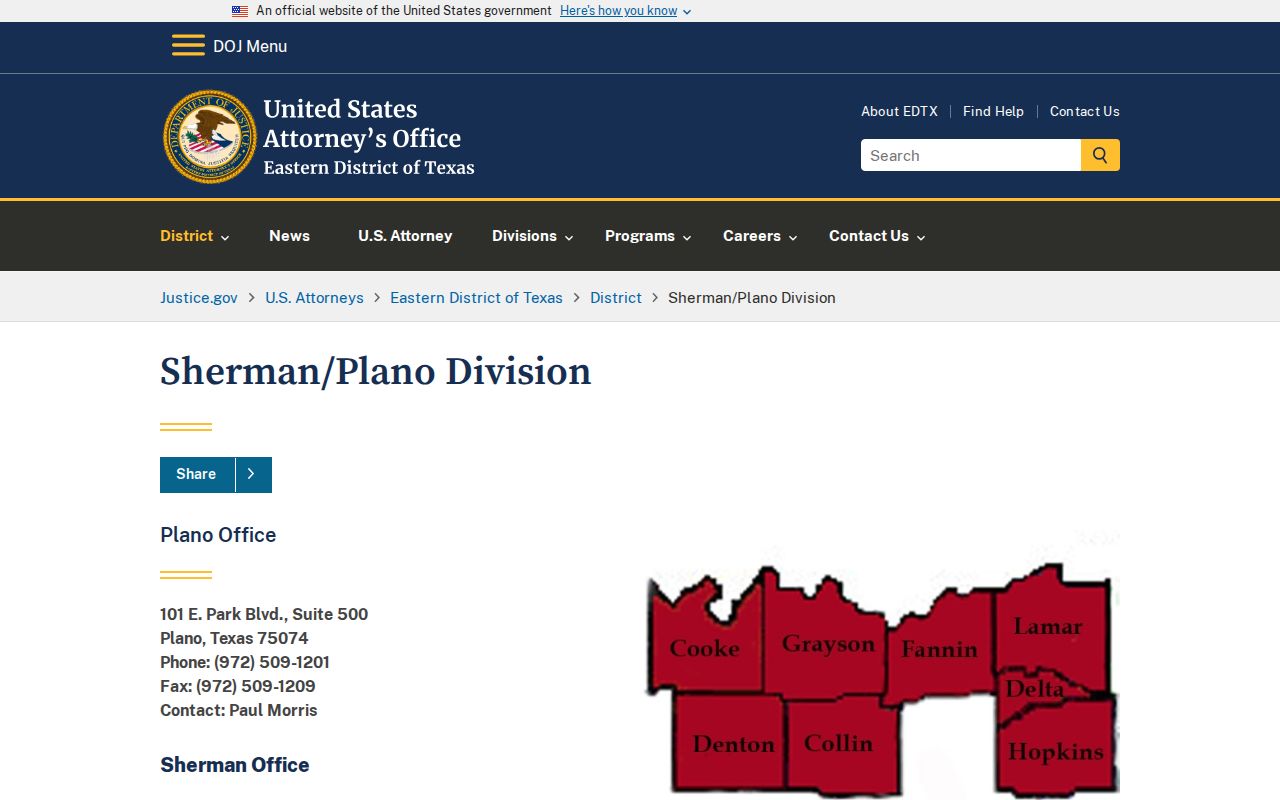
For costs, see the official PACER pricing page; it covers docket access charges for Cooke County and beyond, never warrant status.
Federal Docket Fees Do Not Confirm Process
PACER charges $0.10 per page and generally caps any single document at $3. Fees are waived when your quarterly total stays at $30 or less, under its published rules. That makes the docket cheap to read, but cheap is not the same as complete. A name search can return a case that holds no arrest warrant, and sealed entries may not show at all. The official PACER fee rules tell you what a document costs, never what its status means. A public docket alone, then, cannot settle a current federal question about a warrant. The Eastern District and Cooke County also run separate systems with no shared warrant index between them. Confirm any federal case with that court or with counsel, since local custody details do not decide federal bond or extradition in Cooke County.
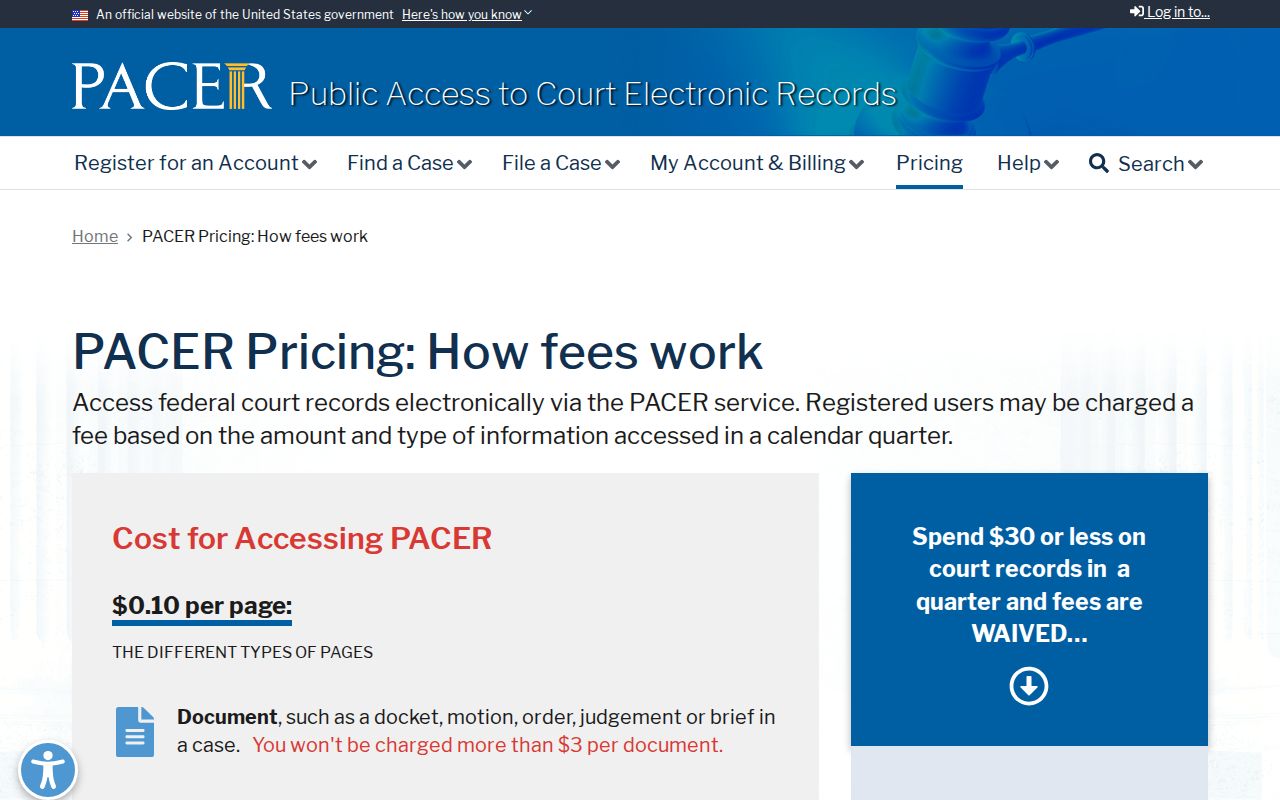
A federal fee schedule helps you plan a document search. It says nothing about whether a warrant is active.